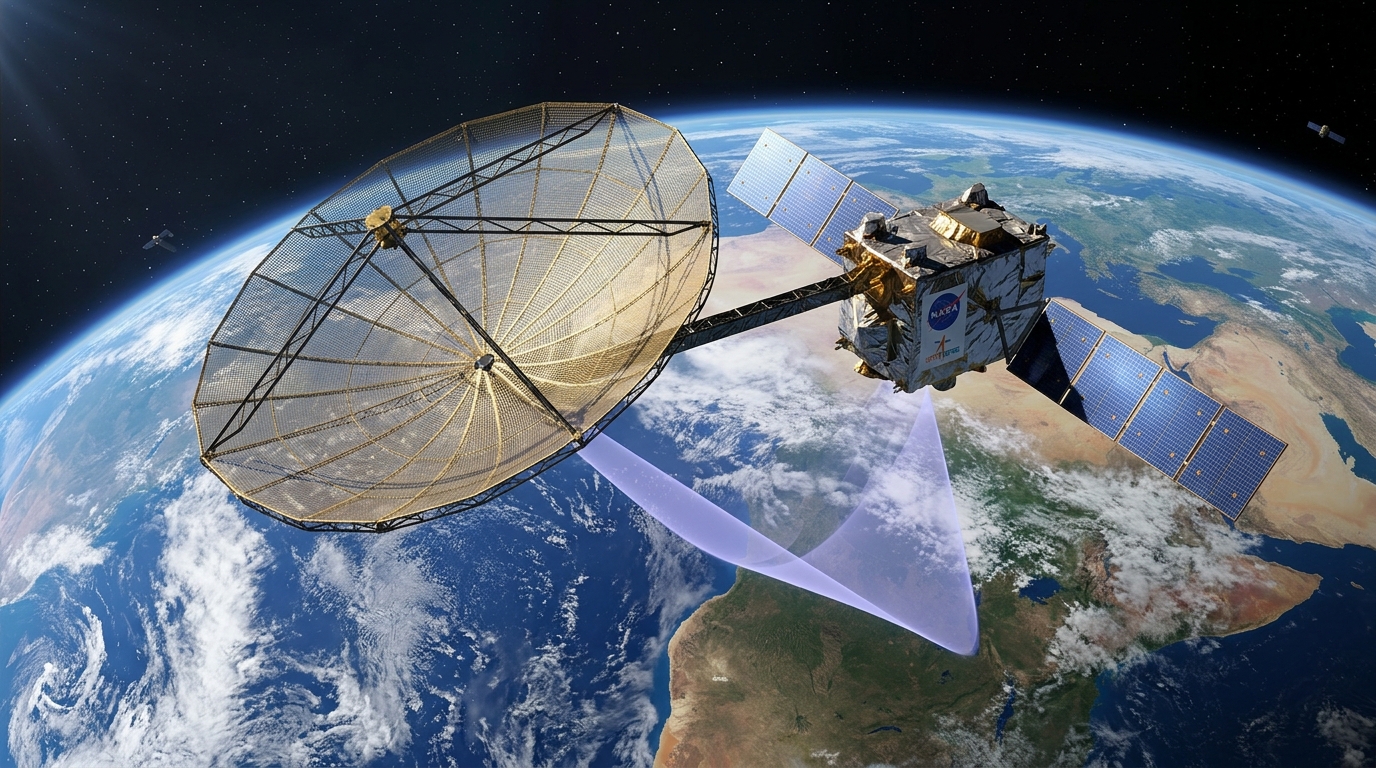
1. ISRO Successfully Injects NVS-03 Satellite into Orbit via GSLV-F18 to Boost NavIC Constellation
The Indian Space Research Organisation (ISRO) successfully launched the GSLV-F18 mission from the Satish Dhawan Space Centre (SDSC-SHAR) in Sriharikota, precisely placing the second-generation navigation satellite, NVS-03, into Geosynchronous Transfer Orbit (GTO). Weighing 2,232 kg, NVS-03 carries an indigenous atomic rubidium clock developed by the Space Applications Centre (SAC), Ahmedabad, and introduces the civilian L1 navigation band alongside legacy L5 and S bands, significantly bolstering positioning accuracy for aviation, disaster management, and mobile location services across India.
🎯 Key Exam Prelims Pointers:
- NavIC (Navigation with Indian Constellation): India's autonomous regional satellite navigation system designed to provide accurate positioning across India and up to 1,500 km beyond its borders.
- Spacecraft Series: The NVS series replaces older IRNSS-1 satellites, featuring higher power, longer mission life (12+ years), and interoperable L1 civilian signals compatible with GPS, Galileo, and GLONASS.
- Atomic Clock: Developed domestically by SAC Ahmedabad, replacing previously imported European rubidium atomic clocks.
2. RBI Relaxes Export Declaration Form (EDF) Rules for Service Exporters & Freelancers
The Reserve Bank of India (RBI) issued a notification granting major regulatory compliance relief to resident individuals exporting software, digital services, and consultancy. Under the revised norms, individual service exporters and independent contractors receiving overseas payments through Authorized Dealer (AD) banks are exempted from submitting physical or separate electronic Export Declaration Forms (EDF), eliminating administrative bottlenecks under FEMA regulations.
🎯 Key Exam Prelims Pointers:
- Foreign Exchange Management Act (FEMA), 1999: Replaced FERA in 2000 to facilitate external trade and payments; RBI is the designated regulatory authority.
- Purpose of EDF: Monitors realization of export proceeds within the statutory timeline (presently 9 months from export date under FEMA).
3. Competition Commission of India (CCI) Approves Adani Energy Acquisition of IntelliSmart
The Competition Commission of India (CCI) approved the strategic acquisition of a majority equity stake in IntelliSmart Infrastructure Private Limited by Adani Energy Solutions Limited. The transaction accelerates the nationwide installation of over 250 million smart prepaid electric meters under the Revamped Distribution Sector Scheme (RDSS).
🎯 Key Exam Prelims Pointers:
- Competition Commission of India: Statutory body established in March 2009 under the Competition Act, 2002; tasked with preventing anti-competitive practices and regulating mergers.
4. India and Mexico Sign Terms of Reference for Preferential Trade Agreement
Officials from the Ministry of Commerce and Industry and Mexico's Secretariat of Economy signed the formal Terms of Reference (ToR) in New Delhi to initiate negotiations for an India-Mexico Preferential Trade Agreement (PTA). The pact targets tariff reductions across pharmaceuticals, automobiles, organic chemicals, and agricultural exports.
🎯 Key Exam Prelims Pointers:
- Trade Pact Hierarchy: PTA (lowest integration, selective tariff cuts) → FTA (zero tariffs on substantially all goods) → CECA/CEPA (includes services, investment, IPR).
📝 Daily Current Affairs MCQ Challenge
Q. Which new civilian frequency band has been introduced in ISRO's second-generation NavIC satellites (NVS series)?
A) L1 band
B) X band
C) Ku band
D) Ka band
Click to View Answer & Explanation
Correct Answer: A) L1 band
Explanation: ISRO's second-generation NVS navigation satellites incorporate the L1 frequency band (1575.42 MHz) in addition to L5 and S bands. The L1 band is the most commonly used civilian frequency worldwide, enabling direct NavIC compatibility with everyday consumer smartphones.


Comments & Reviews
Tap stars to rate this page: