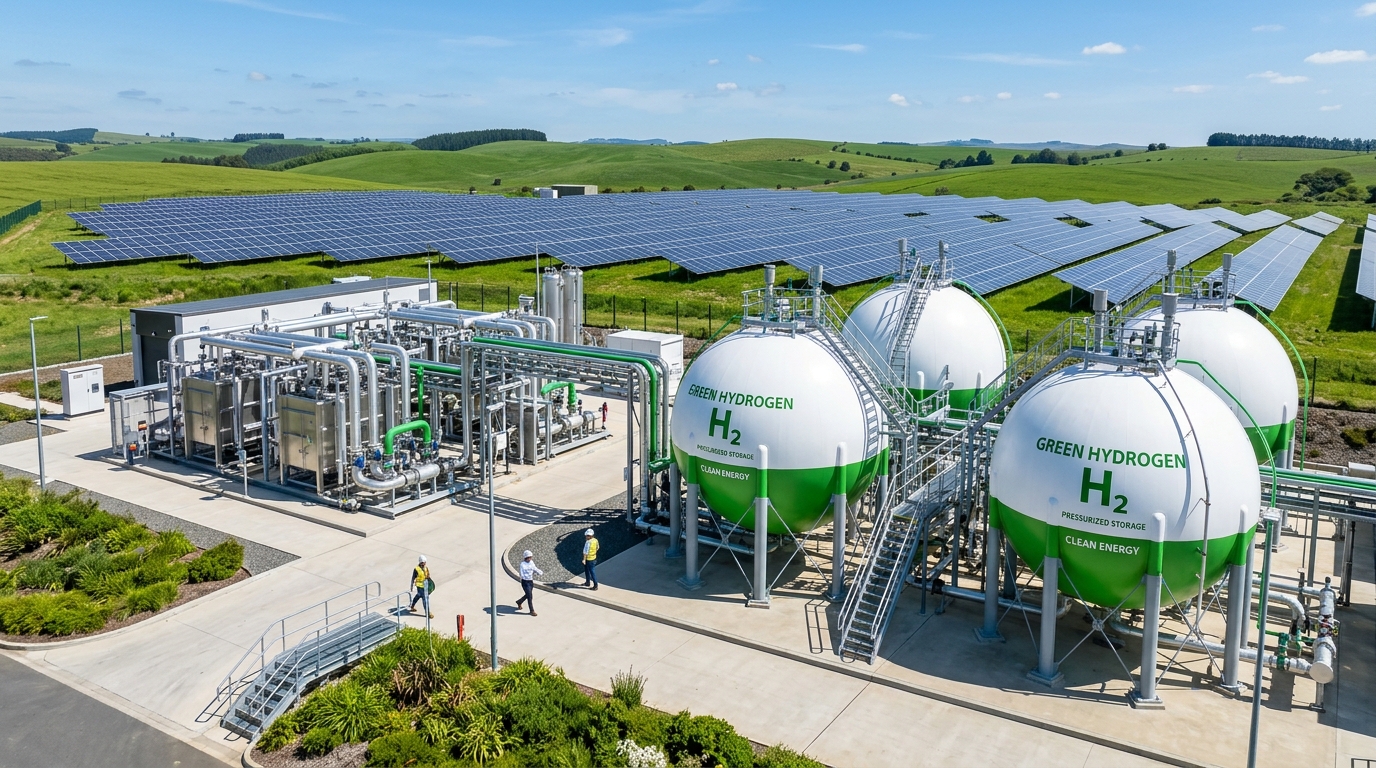
1. Union Cabinet Approves ₹14,500 Crore VGF Scheme for 92 GWh Grid-Scale Energy Storage Systems
The Union Cabinet, chaired by Prime Minister Narendra Modi, approved the ambitious Viability Gap Funding (VGF) Scheme with a financial outlay of ₹14,500 crore for developing 92 GWh (Gigawatt-hours) of battery and pumped hydro energy storage projects across India. Offering capital subsidies up to 40% of project costs, the scheme bridges commercial viability gaps for power DISCOMs, enabling round-the-clock (RTC) green power delivery and smooth absorption of variable solar and wind energy into the national grid.
🎯 Key Exam Prelims Pointers:
- Viability Gap Funding (VGF): Administered by the Department of Economic Affairs, Ministry of Finance, to support economically justified but commercially unviable public-private partnership (PPP) infrastructure projects.
- National Renewable Target: India aims to install 500 GW of non-fossil fuel electricity generation capacity by 2030 and achieve Net Zero carbon emissions by 2070.
2. Centre Clears ₹2,814 Crore Capex Support Scheme for Critical Mineral Processing
In a major industrial policy push, the Cabinet approved a ₹2,814 crore capital expenditure (Capex) scheme to establish commercial processing and refining plants for critical and strategic minerals, such as Lithium, Cobalt, Nickel, and Rare Earth Elements (REEs). The scheme aims to break foreign processing monopolies and ensure a secure domestic supply chain for electric vehicle (EV) batteries and defense avionics.
🎯 Key Exam Prelims Pointers:
- Mines and Minerals (Development and Regulation) Amendment Act: Empowered the central government to conduct exclusive auctions for critical and deep-seated minerals across states and offshore waters.
3. SEBI Rationalizes FPI KYC Rules: Review Period Extended from 3 to 8 Years
Capital markets regulator Securities and Exchange Board of India (SEBI) notified revised Know Your Customer (KYC) norms for Foreign Portfolio Investors (FPIs). Eligible Category I (sovereign wealth funds, central banks, pension funds) and regulated Category II FPIs will now be required to re-perform KYC reviews every 8 years instead of the previous 3-year interval, significantly lowering compliance burdens and boosting foreign institutional inflows into Indian equities.
🎯 Key Exam Prelims Pointers:
- SEBI FPI Regulations, 2019: Re-categorized foreign portfolio investors into Category I (lowest risk, government/sovereign entities) and Category II (regulated mutual funds, investment trusts, corporate bodies).
4. Centre of Excellence Established in Sikkim for Indigenous Siri Cattle Breed
The Department of Animal Husbandry and Dairying sanctioned the establishment of a state-of-the-art Centre of Excellence (CoE) in Sikkim dedicated to the conservation, genetic characterization, and selective breeding of the indigenous Siri cattle. Renowned for its extreme agility and disease resistance in hilly terrain, the Siri breed is vital to sustainable agrarian livelihoods in the Eastern Himalayas.
🎯 Key Exam Prelims Pointers:
- Rashtriya Gokul Mission: Under the Ministry of Fisheries, Animal Husbandry and Dairying, focusing on genetic enhancement and development of indigenous bovine breeds.
📝 Daily Current Affairs MCQ Challenge
Q. SEBI has extended the Know Your Customer (KYC) review period for Category I & II Foreign Portfolio Investors (FPIs) to how many years?
A) 5 years
B) 8 years
C) 10 years
D) 12 years
Click to View Answer & Explanation
Correct Answer: B) 8 years
Explanation: SEBI has relaxed FPI compliance norms by extending the periodic KYC review requirement for low-risk Category I and Category II Foreign Portfolio Investors from 3 years to 8 years, boosting ease of doing business for foreign institutional investors.



Comments & Reviews
Tap stars to rate this page: