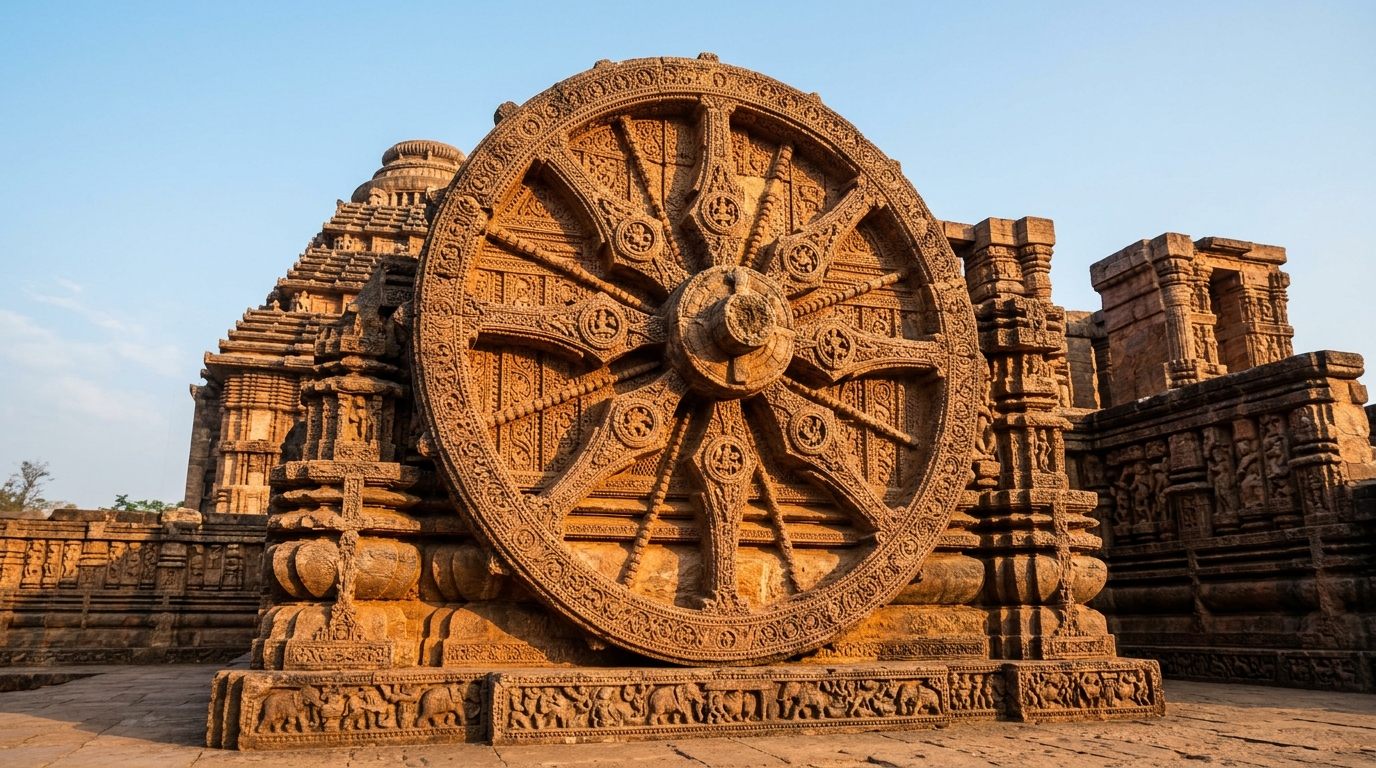
Standing proudly on the coastline of Odisha, the 13th-century Konark Sun Temple is far more than a masterpiece of Kalinga architecture; it is a monumental astronomical instrument frozen in stone. Conceived by King Narasimhadeva I as a gigantic cosmic chariot for Surya, the sun god, the temple features 24 intricately carved stone wheels. These are not merely decorative elements but functional sundials capable of calculating time with astonishing precision down to the minute, reflecting the advanced geometrical and cosmological comprehension of ancient Indian master builders.
The Astronomy of the Stone Wheels
The 24 colossal wheels of the Konark Sun Temple serve as a complex celestial calendar and sundial system, embodying profound astronomical observations.
- Wheel Architecture: Each wheel features 8 major spokes and 8 minor spokes, dividing a 24-hour day into 8 major time segments, with each major interval representing 3 hours and minor intervals representing 7.5 minutes.
- Shadow Mechanics: By observing the shadow cast by the hub of the wheel onto its beaded rims, onlookers can accurately determine the precise time of day.
- Symbolism of Time: The 24 wheels symbolize the 24 hours of a day or the 24 fortnights of a lunar year, seamlessly weaving timekeeping with cosmic theology.
Architectural Mastery and Material Science
Constructed from oxidized chlorite and khondalite rocks, the temple showcases extraordinary engineering feats that withstood centuries of coastal weathering.
- Magnetic Integration: Historical texts suggest a massive lodestone (magnet) weighing over 50 tons was once placed at the crown of the main sanctum, stabilizing the structure and influencing nautical compasses in the Bay of Bengal.
- Interlocking Dry Masonry: The massive stone blocks were joined using iron dowels and interlocking joints without mortar, absorbing seismic energy and coastal high winds.
- Equestrian Symbolism: The temple chariot is pulled by seven sculpted horses, representing the seven days of the week and the seven colors of the visible light spectrum.
Technical & Scientific Specifications
📐 Architectural & Astronomical Specifications
- Total Wheels: 24 intricately carved stone wheels functioning as sundials.
- Wheel Diameter: Approximately 9.9 feet (3 meters) for each major wheel.
- Horses: 7 sculpted horses representing the days of the week.
- Material Composition: Khondalite and chlorite stone blocks joined without mortar.
Key Exam & Knowledge Takeaways
🎯 Important Examination Points
- Konark Sun Temple was built by King Narasimhadeva I of the Eastern Ganga Dynasty in the 13th century.
- It is a quintessential example of Kalinga architecture, designated as a UNESCO World Heritage Site.
- The 24 wheels of the temple function as precise equinoctial sundials capable of calculating minute-level time.
- The temple layout represents a celestial chariot driven by seven horses across the heavens.
- Advanced metallurgical techniques including iron dowels and magnetic stone alignment were utilized in its construction.
Legacy and Scientific Significance
The Konark Sun Temple stands as an immortal testament to the synthesis of art, religion, and empirical science in ancient India. By embedding complex astronomy within aesthetic stone sculptures, ancient builders created a timeless monument that continues to captivate physicists, historians, and travelers across the globe.

Comments & Reviews
Tap stars to rate this page: