Why Do Octopuses Have 3 Hearts and Blue Blood? The Amazing Science Explained
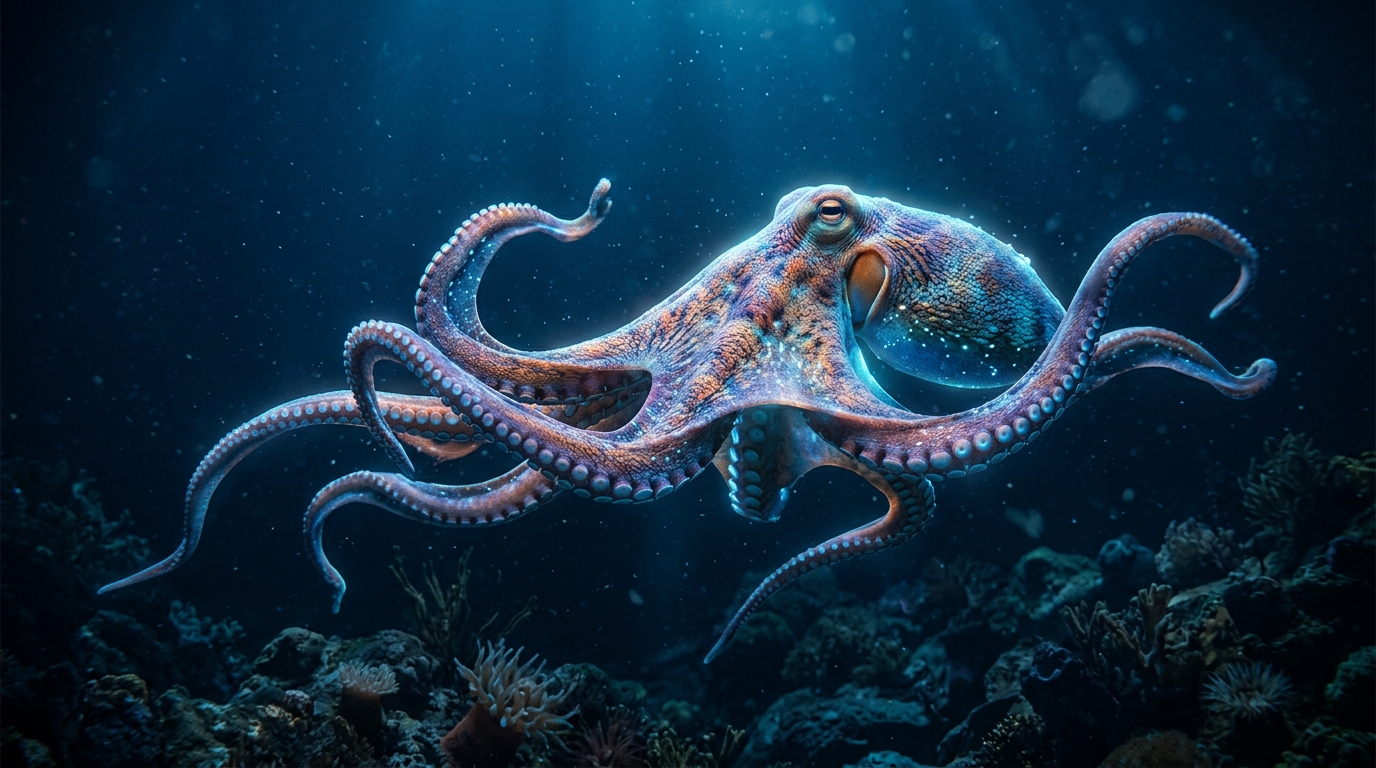
Have you ever wondered why octopuses are considered one of the most fascinating and alien-like creatures on planet Earth? Unlike mammals that rely on a single heart to pump red blood, the octopus boasts an incredible biological setup: three hearts and blue blood. But why does nature require such a complex system?
The Function of the Three Hearts
The circulatory system of an octopus is a marvel of evolution. Out of the three hearts, two are known as branchial hearts. Their sole purpose is to pump blood through each of the two gills, ensuring the blood gets properly oxygenated. Once the blood is full of oxygen, it moves to the third heart.
This third heart, called the systemic heart, takes on the heavy lifting. It pumps the oxygenated blood to the rest of the octopus's body, providing energy for its brain and eight incredibly active arms. Interestingly, when an octopus swims fast, the systemic heart actually stops beating! This is why octopuses prefer crawling on the ocean floor—swimming exhausts them quickly.
The Secret Behind Blue Blood
While human blood is red due to iron-based hemoglobin, an octopus's blood is blue because it relies on a copper-rich protein called hemocyanin. In the freezing, low-oxygen depths of the ocean where octopuses live, hemocyanin is far more efficient at transporting oxygen than hemoglobin.
This evolutionary adaptation allows the octopus to survive in extreme marine environments where most other creatures would suffocate. Next time you see an octopus, remember you are looking at a creature with copper running through its veins and three hearts powering its intelligent brain!