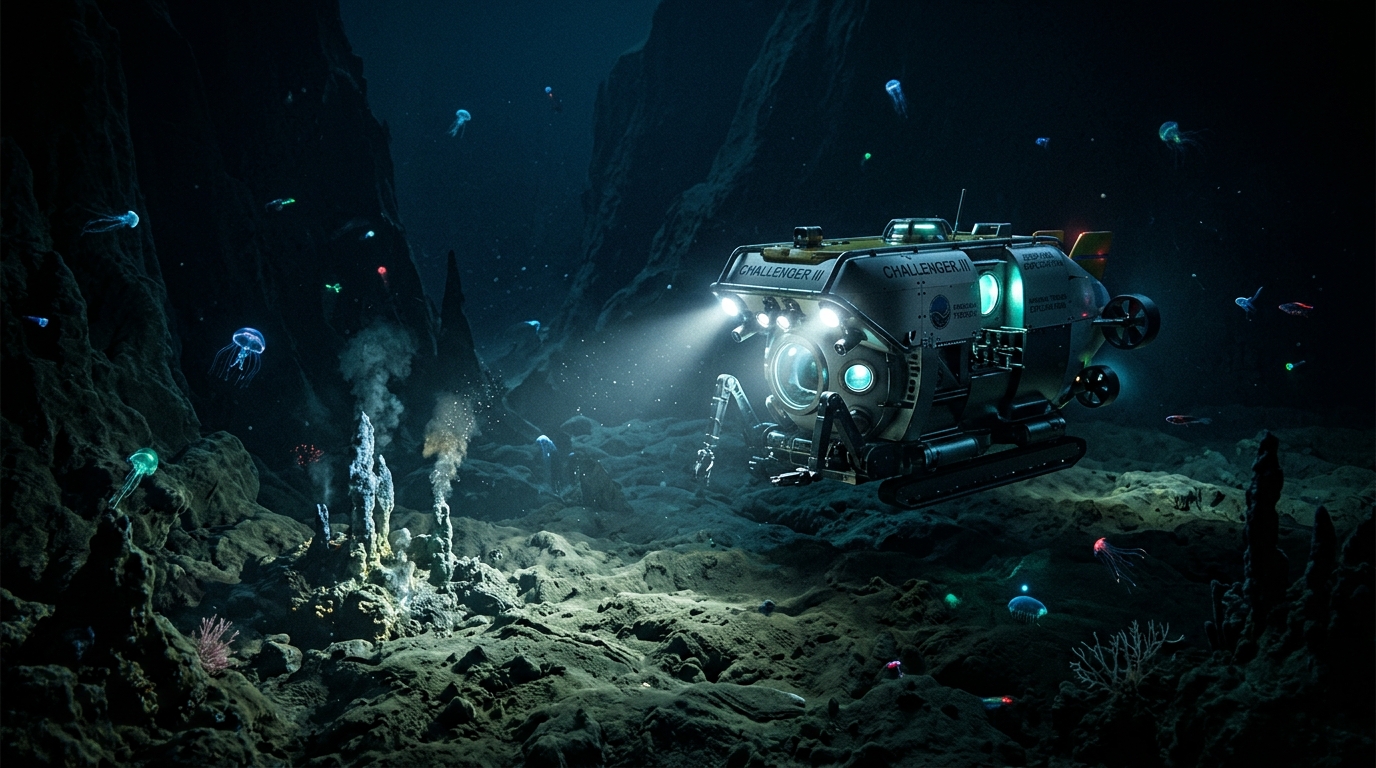
Deep in the benthic abysses of Earth's oceans, thousands of meters below the sunlit epipelagic zone, lie extreme geothermal wonders known as hydrothermal vents. First discovered in 1977 along the Galápagos Rift, these underwater geysers—often referred to as 'black smokers'—spew mineral-rich fluids at temperatures exceeding 400°C (752°F). Defying the long-held scientific assumption that all complex life on Earth relies fundamentally on solar energy and photosynthesis, hydrothermal vent fields support bustling, exotic ecosystems powered entirely by chemical reactions and microbial chemosynthesis.
Geochemical Dynamics and Black Smoker Formation
Hydrothermal vents form along oceanic spreading centers, mid-ocean ridges, and subduction zones where tectonic plates diverge, allowing seawater to interact directly with sub-crustal magma.
- Seawater Percolation and Superheating: Cold, dense seawater (around 2°C) seeps through porous basalt deep into the oceanic crust. Warmed by magma chambers beneath, the fluid reaches superheated temperatures up to 400°C without boiling due to intense hydrostatic pressure.
- Mineral Leaching and Precipitation: As the hot, acidic fluid rises, it dissolves heavy metals like iron, copper, zinc, and sulfur from subterranean rocks. Upon erupting into cold, alkaline ocean water, these minerals immediately precipitate into fine metal sulfide particles, forming towering dark chimneys resembling industrial smoke stacks.
Chemosynthesis and Extremophilic Biological Adaptations
In perpetual darkness under extreme hydrostatic pressures, hydrothermal vents sustain specialized biological communities through a process called chemoautotrophy.
- Microbial Hydrogen Sulfide Oxidation: Chemolithoautotrophic bacteria serve as the primary producers of the vent ecosystem. Instead of using sunlight, they oxidize dissolved hydrogen sulfide (H₂S) and methane to fix inorganic carbon into rich organic matter.
- Symbiotic Organisms: Giant tube worms (Riftia pachyptila), which lack mouths and digestive tracts, harbor billions of sulfur-oxidizing bacteria inside a specialized internal organ called a trophosome, gaining all nourishment directly from their bacterial partners.
Technical & Scientific Specifications
📐 Geothermal & Oceanographic Specifications
- Maximum Hydrothermal Fluid Temperature: Up to 407°C (765°F), remaining liquid under ambient pressures exceeding 250 atmospheres.
- Dominant Solute Compounds: Hydrogen sulfide (H₂S), methane (CH₄), ferrous iron (Fe²⁺), copper (Cu), and zinc (Zn).
- Typical Abyssal Depth Range: 2,000 to 4,000 meters (6,500 to 13,000 feet) below sea level.
- Chimney Vertical Growth Rate: Up to 30 centimeters (1 foot) per day for mineral rich sulfide pillars.
Key Exam & Knowledge Takeaways
🎯 Important Examination Points
- Hydrothermal vents proved that complex primary production can occur independently of solar radiation via chemosynthesis.
- Black smokers emit heavy metal sulfides (iron, copper, zinc), while white smokers typically emit cooler fluids rich in barium, calcium, and silicon.
- Enzymes isolated from vent extremophiles (extremozymes) possess immense thermal stability, making them critical in industrial biotechnology and genetic engineering.
- Vent environments serve as prime terrestrial analogs for searching for extraterrestrial life on icy ocean moons such as Jupiter's Europa and Saturn's Enceladus.
Legacy and Scientific Significance
The discovery of hydrothermal vents fundamentally reshaped our understanding of geochemical dynamics and the parameters of biological life. By proving that complex organisms can thrive on pure planetary geothermal energy isolated from solar radiation, these underwater chimneys remain vital models for deciphering the origin of life on early Earth and identifying potential biosignatures across dark, icy worlds in the cosmos.


Comments & Reviews
Tap stars to rate this page: