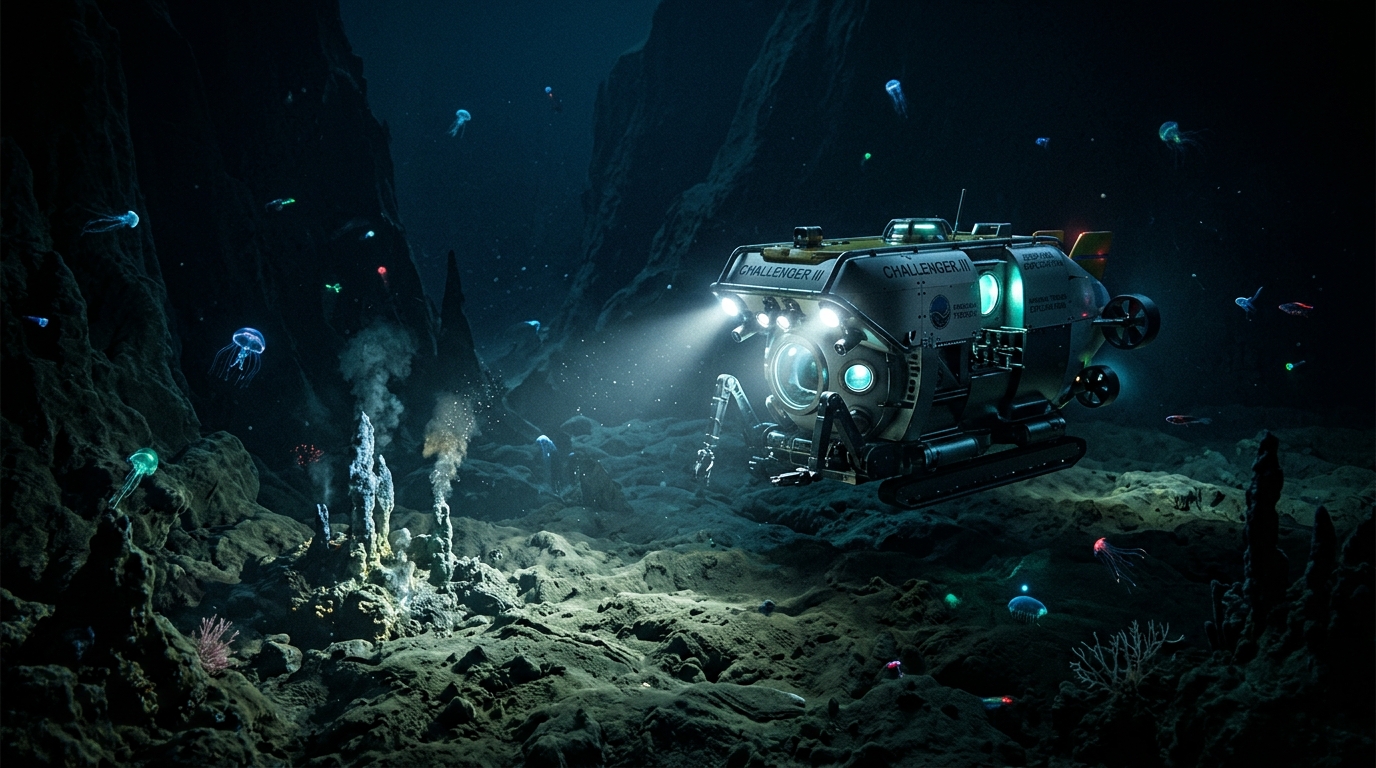
Beneath the restless surface of the world's oceans lies a hidden architectural marvel of fluid dynamics: the pycnocline. This invisible boundary layer separates the sunlit upper mixed ocean from the crushing, frigid depths below. By acting as a dense physical barrier, the pycnocline inhibits vertical mixing, regulates global heat distribution, and fundamentally shapes the distribution of marine life across the globe.
The Physics of Density Gradients
The pycnocline is formed by the interplay of temperature and salinity, which together dictate seawater density.
- Temperature Influence (Thermocline): Warm surface waters heated by solar radiation are less dense and float above the cold, heavy water of the deep ocean, creating a sharp temperature gradient known as the thermocline.
- Salinity Influence (Halocline): In high-evaporation regions or areas of intense ice-melting, salinity variations create a halocline that compounds the density shift, reinforcing the pycnocline boundary.
- Suppression of Vertical Mixing: Because the pycnocline features a rapid increase in density over a relatively small vertical distance, it requires immense mechanical energy (such as extreme storms or powerful internal waves) to pierce, keeping deep water isolated.
Ecological and Climatic Significance
The existence of the pycnocline has profound implications for global nutrient cycles, carbon sequestration, and marine biology.
- Nutrient Trapping: Dead organic matter sinks below the pycnocline, decomposing and releasing nutrients into the deep ocean. Without upwelling mechanisms, the surface layer can become nutrient-depleted.
- Internal Waves: The pycnocline acts as a subsurface shoreline where internal solitary waves (solitons) propagate, transferring energy across vast underwater distances and mixing coastal waters.
- Climate Regulation: By locking away immense volumes of cold water and dissolved carbon dioxide in the deep ocean, the pycnocline slows down the rate of global warming, acting as a critical planetary thermal buffer.
Technical & Scientific Specifications
📐 Oceanographic Specifications
- Typical Depth Range: 100 meters to 1,000 meters below the ocean surface
- Primary Drivers: Temperature (Thermocline) and Salinity (Halocline)
- Global Extent: Present in nearly all open ocean and deep sea basins
- Density Shift: Rapid increase in Sigma-t ($\sigma_t$) values per vertical meter
Key Exam & Knowledge Takeaways
🎯 Important Examination Points
- The pycnocline is defined as the layer in the ocean where water density increases rapidly with depth.
- It permanently separates the surface mixed layer (epipelagic zone) from the deep ocean (pelagic/benthic zones).
- In polar regions, the pycnocline is heavily driven by salinity variations (halocline) rather than temperature.
- It acts as a physical barrier preventing the free exchange of dissolved gases and nutrients between upper and lower water columns.
- Understanding the pycnocline is essential for marine navigation, acoustics propagation, and global climate modeling.
Legacy and Scientific Significance
The pycnocline stands as a testament to the complex, stratified nature of Earth's hydrosphere. By maintaining the delicate boundary between the warm, dynamic surface and the cold, static abyss, this invisible fluid layer dictates the rhythm of marine ecosystems and helps stabilize Earth's climate engine against rapid thermodynamic shifts.

Comments & Reviews
Tap stars to rate this page: