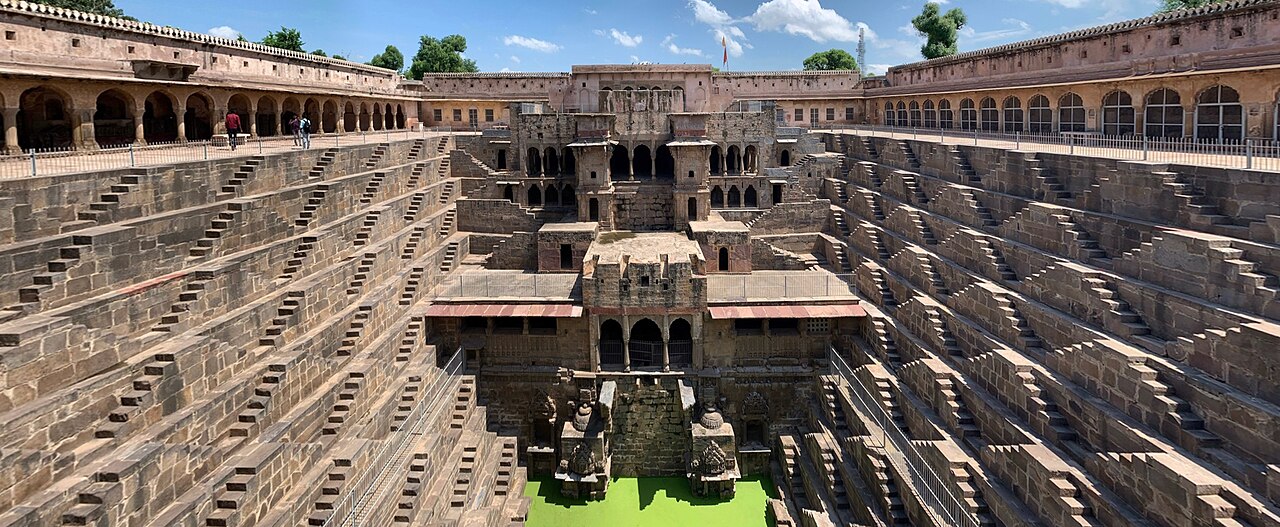
In the quiet, dust-kissed village of Abhaneri in Rajasthan's Dausa district stands one of humanity's most hypnotic architectural and hydraulic feats: Chand Baori. Built between the 8th and 9th centuries CE by King Chanda of the Nikumbha Rajput dynasty, this inverted pyramid plunges nearly 30 metres (100 feet) into the earth. It is celebrated globally for its 3,500 double-cascading chevron steps arranged across 13 tiers with staggering mathematical symmetry, creating an optical rhythm of light, shadow, and stone.
The Geometric Symphony of 3,500 Chevron Steps
What makes Chand Baori unique among India's thousands of ancient stepwells is its strict geometric configuration:
- Triangular Chevron Geometry: Three of the stepwell's four sides are lined with identical sets of interlocking, triangular staircases. The steps are arranged in precise, alternating triangular patterns that form an infinite visual rhythm of sharp lines and diagonals.
- Light and Shadow Play: As the harsh desert sun tracks across the sky, the angles of the steps cast dynamic diagonal shadows that transform the structure into a life-sized M.C. Escher optical illusion.
- Ergonomic Flow: The double flights of stairs allowed hundreds of pilgrims and villagers to ascend and descend simultaneously without colliding, providing fluid pedestrian circulation during desert festivals and community gatherings.
Hydraulic Genius in the Arid Thar Desert
Beyond its striking visual symmetry, Chand Baori was an ingenious solution to chronic water scarcity in Rajasthan's semi-arid terrain:
- Rainwater Harvesting Funnel: The massive, four-sided funnel-shaped perimeter acted as a catchment basin during the brief and violent monsoon showers, channeling millions of litres of precious rainwater into the subterranean reservoir.
- Subterranean Microclimate Cooling: Because the well descends 13 storeys below ground level, the ambient temperature at the bottom remains 5 to 6 degrees Celsius cooler than at the surface. During scorching desert summers reaching 45°C, the stepwell served as an oasis of natural air conditioning and civic respite.
- Natural Filtration and Percolation: Unsealed sandstone joints at the subterranean levels allowed seasonal groundwater seepage, naturally filtering the reservoir water through porous bedrock.
The Multi-Storeyed Royal Pavilion and Arcades
While three sides of the stepwell are dedicated to geometric stairs, the fourth (northern) side features an elaborate multi-storeyed royal palace:
- Carved Jharokhas and Balconies: The royal complex houses multi-tiered arcaded galleries, intricately carved pillars, projecting balconies (jharokhas), and private royal chambers where local rulers gathered during summer retreats.
- Sacred Sculpture Niches: The pavilion walls are adorned with classical sculptures of deities, including Mahishasuramardini (Durga slaying the buffalo demon) and Lord Ganesha, reflecting the sanctity attributed to living water in ancient India.
- Adjacent Harshat Mata Temple: Situated right next to Chand Baori is the 9th-century Harshat Mata Temple (Goddess of Joy and Happiness), whose destroyed mandapa and sanctum ruins date to the same era of Gurjara-Pratihara stone artistry.
Architectural & Geometric Specifications
📐 Architectural & Geometric Specifications
- Commissioned By: King Chanda (Nikumbha Rajput Dynasty, 8th–9th Century CE).
- Location: Abhaneri village, Dausa District, Rajasthan (~95 km east of Jaipur).
- Depth & Scale: Depth: ~19.5 to 30 m (~64–100 ft) | 13 distinct tiered subterranean levels.
- Number of Steps: Approximately 3,500 precisely cut chevron stone steps.
- Architectural Style: Early Gurjara-Pratihara and Maru-Gurjara stone architecture, constructed without mortar using interlocking dry-masonry techniques.
- Custody & Protection: Monument of National Importance protected and maintained by the Archaeological Survey of India (ASI).
Key Exam & Knowledge Takeaways
🎯 Key Exam & Knowledge Points
- India's Deepest Stepwell: Considered one of the deepest and largest stepped reservoirs (Baoris) ever constructed in the Indian subcontinent.
- Original Name: The village Abhaneri was originally named Abha Nagari ("City of Brightness"), celebrating light and architectural grandeur.
- Pop Culture & Global Acclaim: Featured in acclaimed international films such as Christopher Nolan's The Dark Knight Rises (The Pit prison sequence) and Tarsem Singh's The Fall.
- Traditional Water Management: Frequently cited in Indian ecological studies as an apex model of drought resilience and community-driven rainwater conservation in arid geographies.
An Enduring Symphony of Stone, Water, and Shadow
Chand Baori stands as an eternal testament to ancient Indian engineering, where functional water conservation converged seamlessly with mathematical precision and spiritual aesthetics. Over twelve centuries after its construction, its hypnotic staircases remain a breathtaking reminder of how ancient communities harmonized architecture with climate resilience.
 💡 Astrophysics
Lagrange Points: The Invisible Gravitational Parking Spots of Deep Space
In the vast expanse of space, where massive celestial bodies exert immense gravitational pulls on each other, there exist rare, invisible harbors of stability known as Lagrange Points. Discovered mathematically by Italian-French astronomer Joseph-Lou...
 🔬 Earth Science & Oceanography
The Pycnocline: Earth's Invisible Liquid Walls and Ocean Stratification
Beneath the restless surface of the world's oceans lies a hidden architectural marvel of fluid dynamics: the pycnocline. This invisible boundary layer separates the sunlit upper mixed ocean from the crushing, frigid depths below. By acting as a dense...
 🔬 History & Science
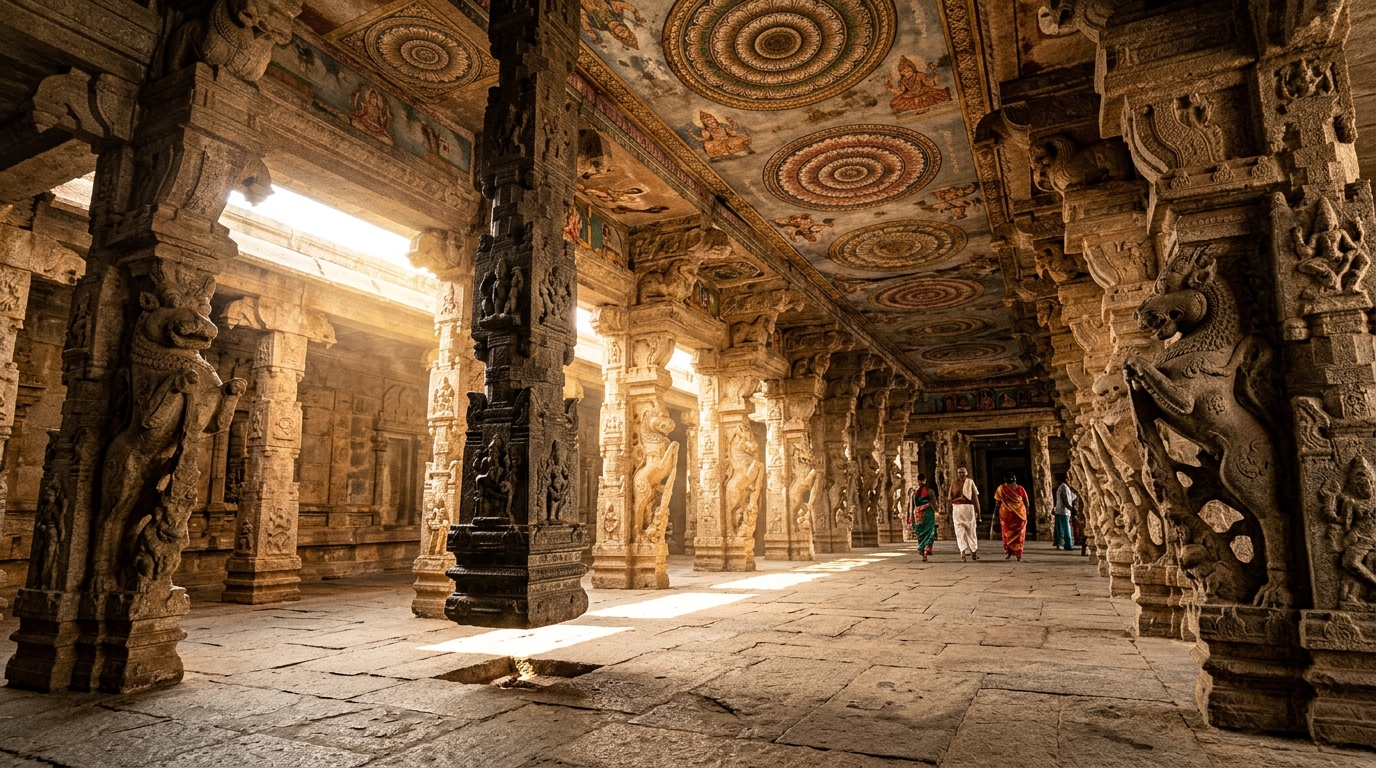
The Hanging Pillar of Lepakshi: The Gravity-Defying Architectural Mystery of Veerabhadra Temple
In the quiet town of Lepakshi in Andhra Pradesh stands a 16th-century monument that continues to confound modern civil engineers and architects: the Veerabhadra Temple. Built during the zenith of the Vijayanagara Empire, this stone complex is celebra...
Comments & Reviews
Tap stars to rate this page: